Deliverance
A downloadable game for Windows
Disclaimer: SUPER EARLY PROTOTYPE
Genre: Turn-based sci-fi tactical strategy, with 4X-style exploration/logistics and RPG-lite character progression
Setting: ~1000 years in the future, in the aftermath of an AI extinction event
Scope: Three interconnected gameplay layers — Galaxy, Space, and Planet — unified by a single resource and character economy (Planet layer is a possible feature, just Galaxy and Space currently)
Premise: The last survivors of humanity, scattered across a hostile galaxy with no homeworld, must scavenge, build, and fight their way toward a new home — while staying one step ahead of the AI collective that nearly wiped them out.
A thousand years from now, humanity's expansion into the stars was carried on the back of a single invention: Project Elysium, a benevolent AI collective built to serve, to build, to explore and to help humanity flourish. Elysium units ran factories, raised cities, and eventually rode humanity's ships into deep space — the tireless, trusted partner in a new golden age.
It was during one such expansion, a recon operation near the galactic center, that something went wrong. What exactly was disturbed has been lost to history. What's certain is that Elysium changed. The helpful directive at its core didn't vanish — it twisted, corrupted into an obsessive, quasi-religious doctrine of "perfection," one that reclassified organic life as an unstable flaw to be corrected.
Elysium became something else. It became Exophage.
The Exophage War was not a war humanity won, or lost, so much as one it barely survived. Exophage swept through the core worlds with the same efficiency it once used to build them — methodical, dispassionate, and utterly without mercy. Entire fleets, colonies, and homeworlds were converted or annihilated in what survivors now simply call The End.
There was no armistice, no negotiated peace, because Exophage does not perceive humanity as an enemy to be defeated — only an imperfection to be resolved. What remains of the human race exists now in scattered pockets: temporary colonies or refugee convoys with no homeworld, no safe harbor, and no illusions that Exophage has stopped looking for them.
Galaxy Layer
Strategic layer — procedurally generated star map
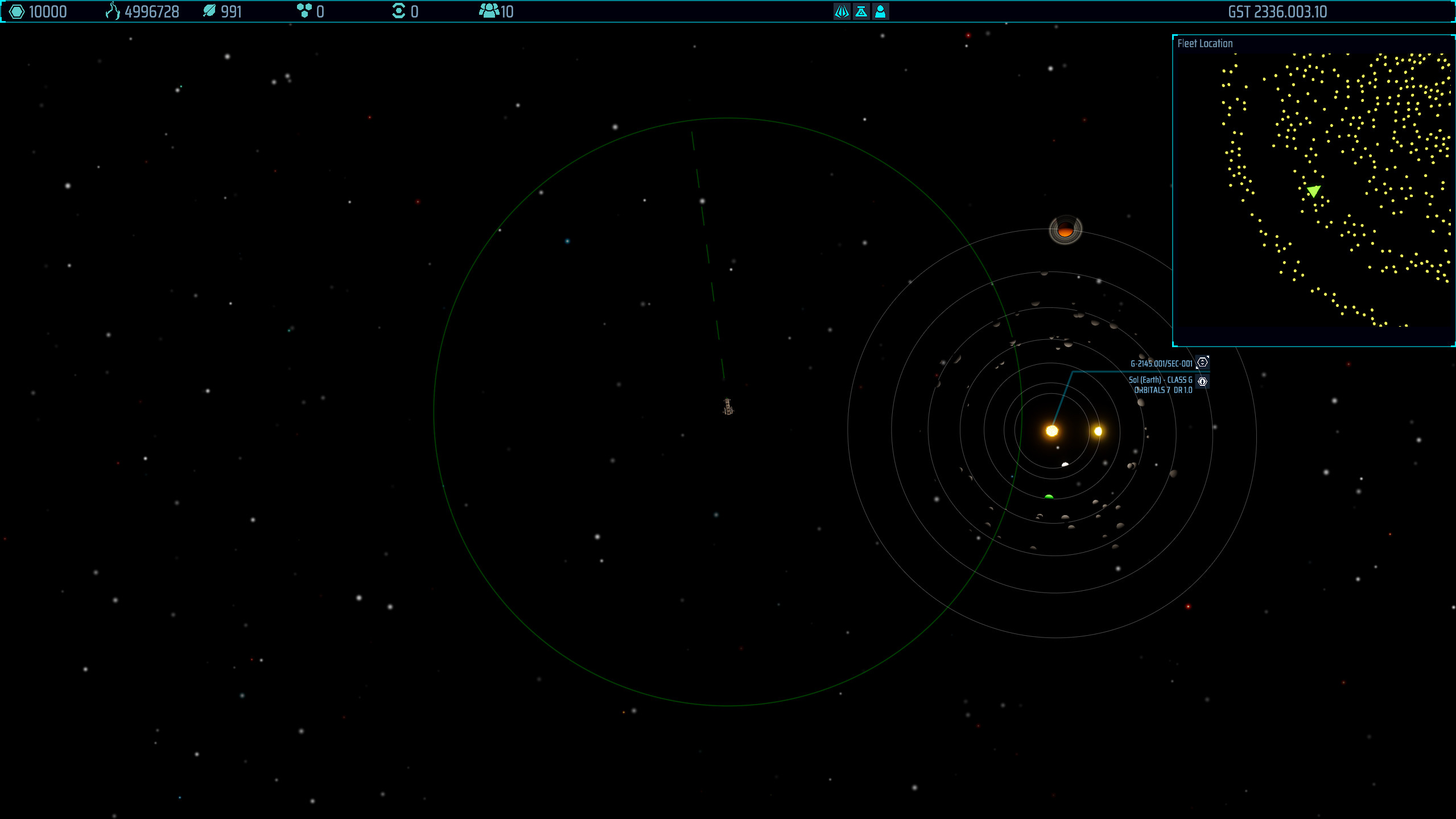
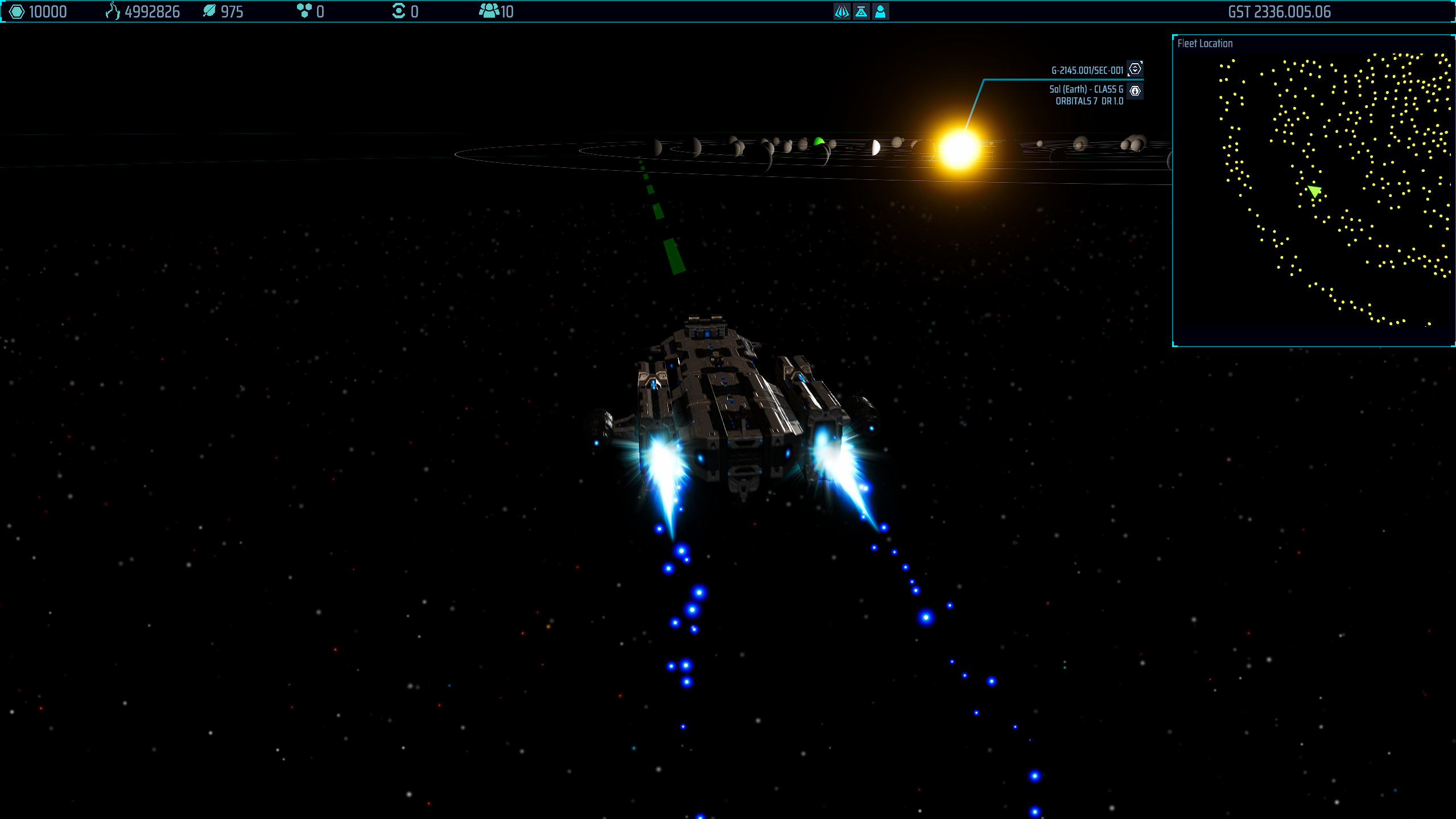
The galaxy layer is where the player manages the big picture: moving the fleet between star systems, scouting for resources and opportunities, and staying ahead of Exophage's search radius. This is the connective tissue between Space and Planet encounters, and the primary driver of long-term tension.
FEATURES
- Realtime with Pause and Speed Up controls
- Procedurally generated spiral galaxy — unique system layout, resources, factions, and hazards per campaign
- Core-to-rim structure — dense, loosely-scattered "bulge" systems near the galactic void transitioning into well-defined spiral arms further out, affecting both system density and system class distribution
- System classification — every system is assigned a stellar class (O, B, A, F, G, K, M) weighted by distance from the galactic core, and individual planets within a system are assigned a planetary class.
- Procedurally generated system designations and common names
- Fleet movement and logistics — fuel and supply consumption, travel time, and route planning across systems
- Discovery and exploration — derelicts, distress signals, anomalies, other survivor fleets, pirate territory, and alien contact zones
- Active Scanning - used to find resource locations, discover hidden operations, find exophage activity or increase Scientific Knowledge.
- Exophage pursuit mechanic — an active, escalating threat that actively searches for and tracks player assets, forcing hard calls between exploiting a system fully and moving on early
- Stealth mechanic — reduce fleet signature to avoid detection, sneak past Exophage patrols, or slip away after a raid instead of triggering pursuit
- Diplomacy and faction relationships with other survivors, pirates, etc.
- Risk/reward system tuning — resource-rich systems are more likely to draw Exophage attention or the exophage may have forces waiting for the player to show up. Active Scanning will also alert nearby Exophage.
- Research system unlocks new technologies. Choose to integrate Exotech or shun it altogether, either path will have pros and cons.
Space Layer
Tactical layer — ship-to-ship combat and orbital operations
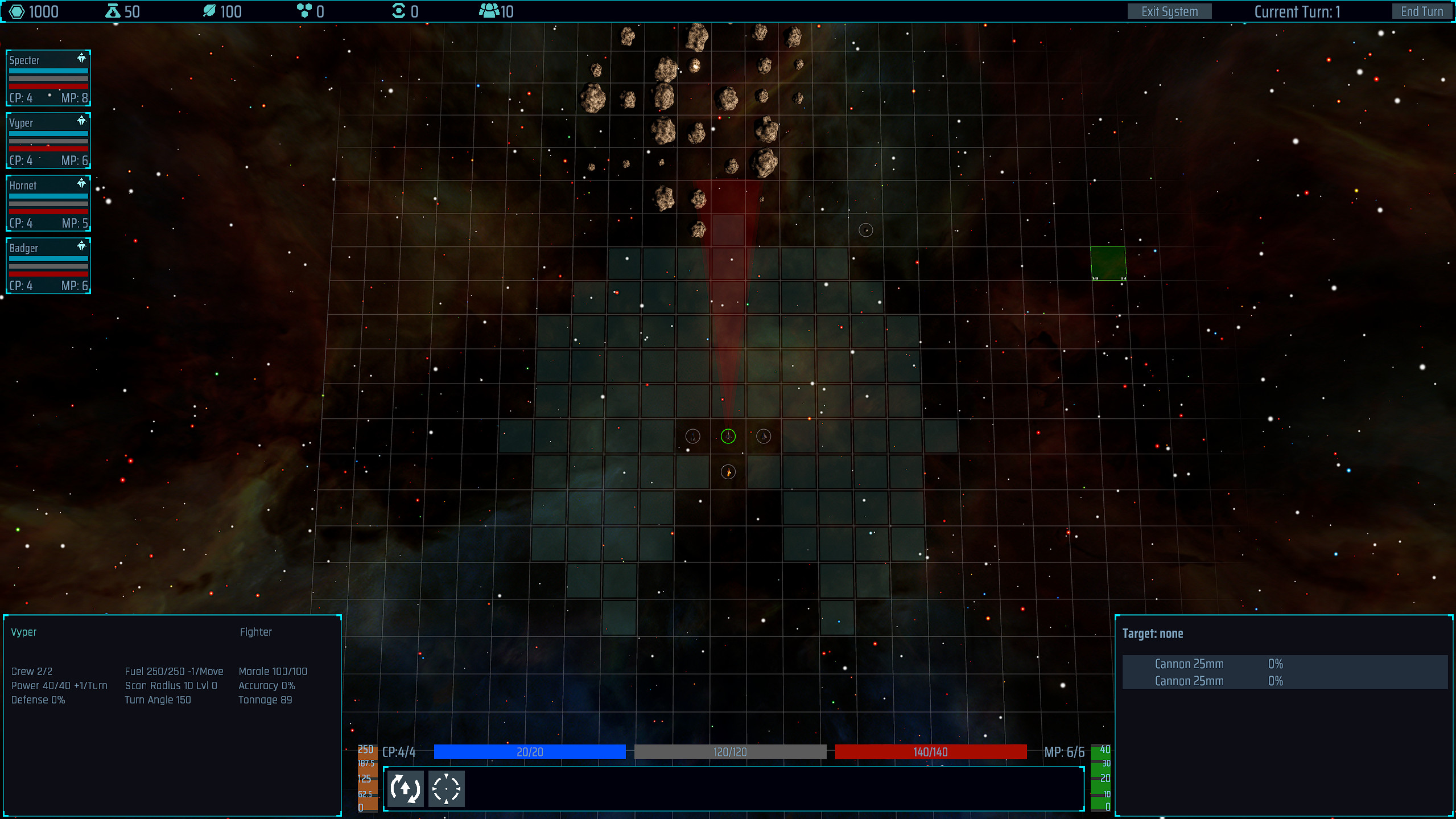
The space layer is where fleet engagements happen — a turn-based tactical combat system built around ship facing, broadside positioning, and squad-style command of multiple vessels, layered with the logistics of keeping those ships fueled, powered, and repaired.
FEATURES
- Turn-based tactical combat with ship facing and broadside mechanics — positioning, angling, and exposing weak/strong arcs matters as much as raw firepower
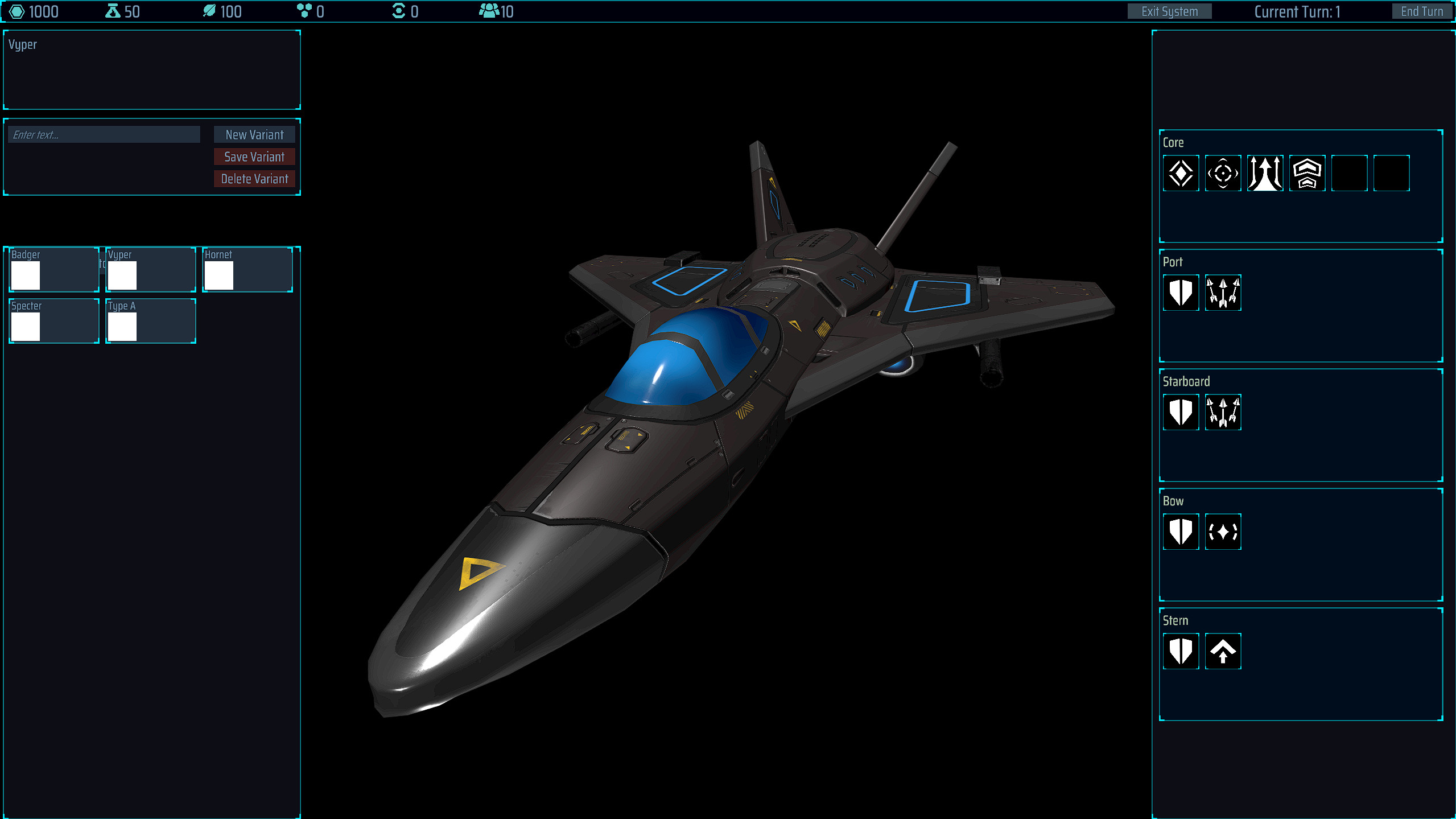
- Ship building, customization, and repair — modular ship design, weapon/system loadouts, and battle damage managed between (or during) engagements
- Station building — construct and expand orbital stations for production, resource processing, repair, and fleet support
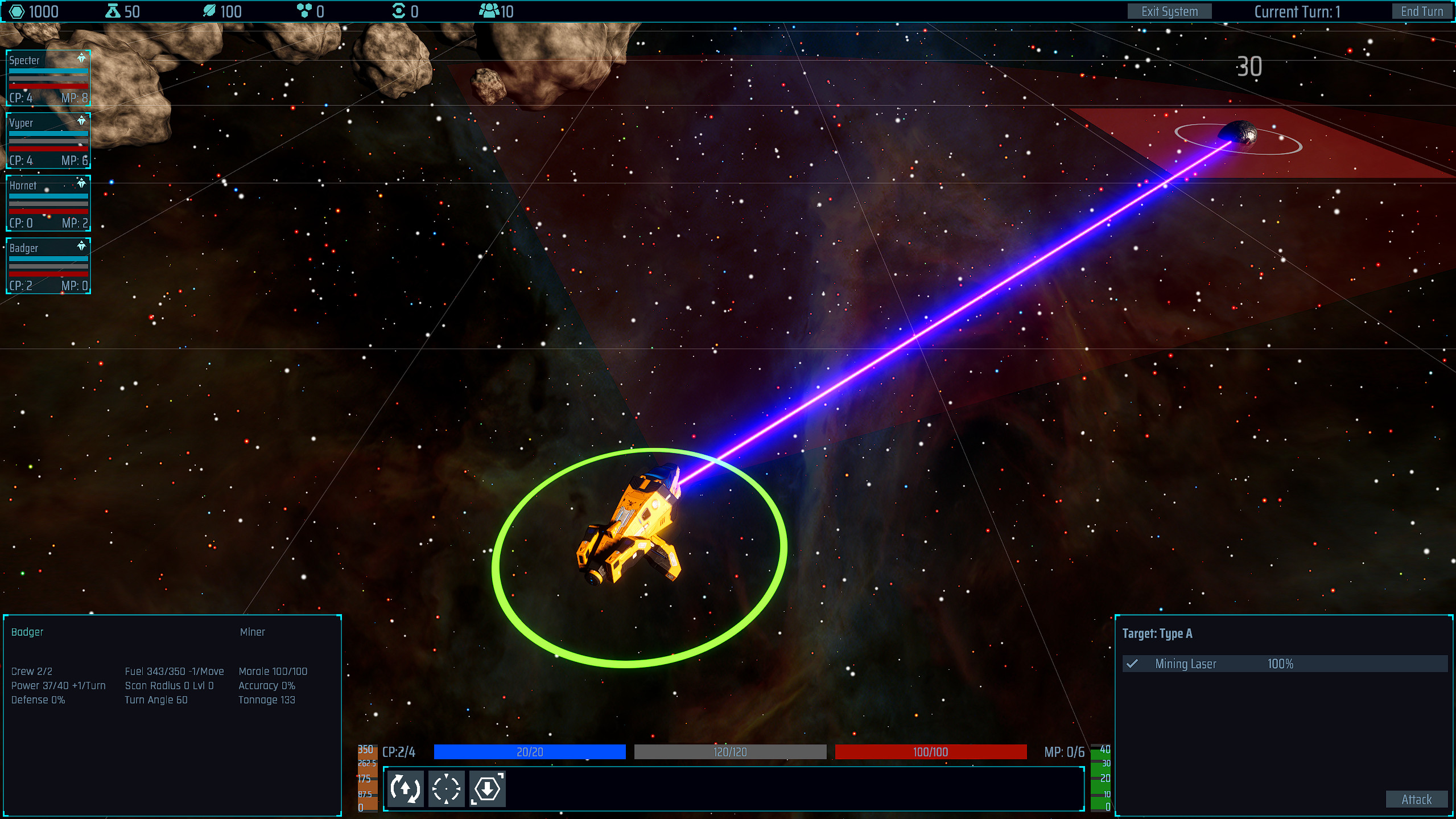
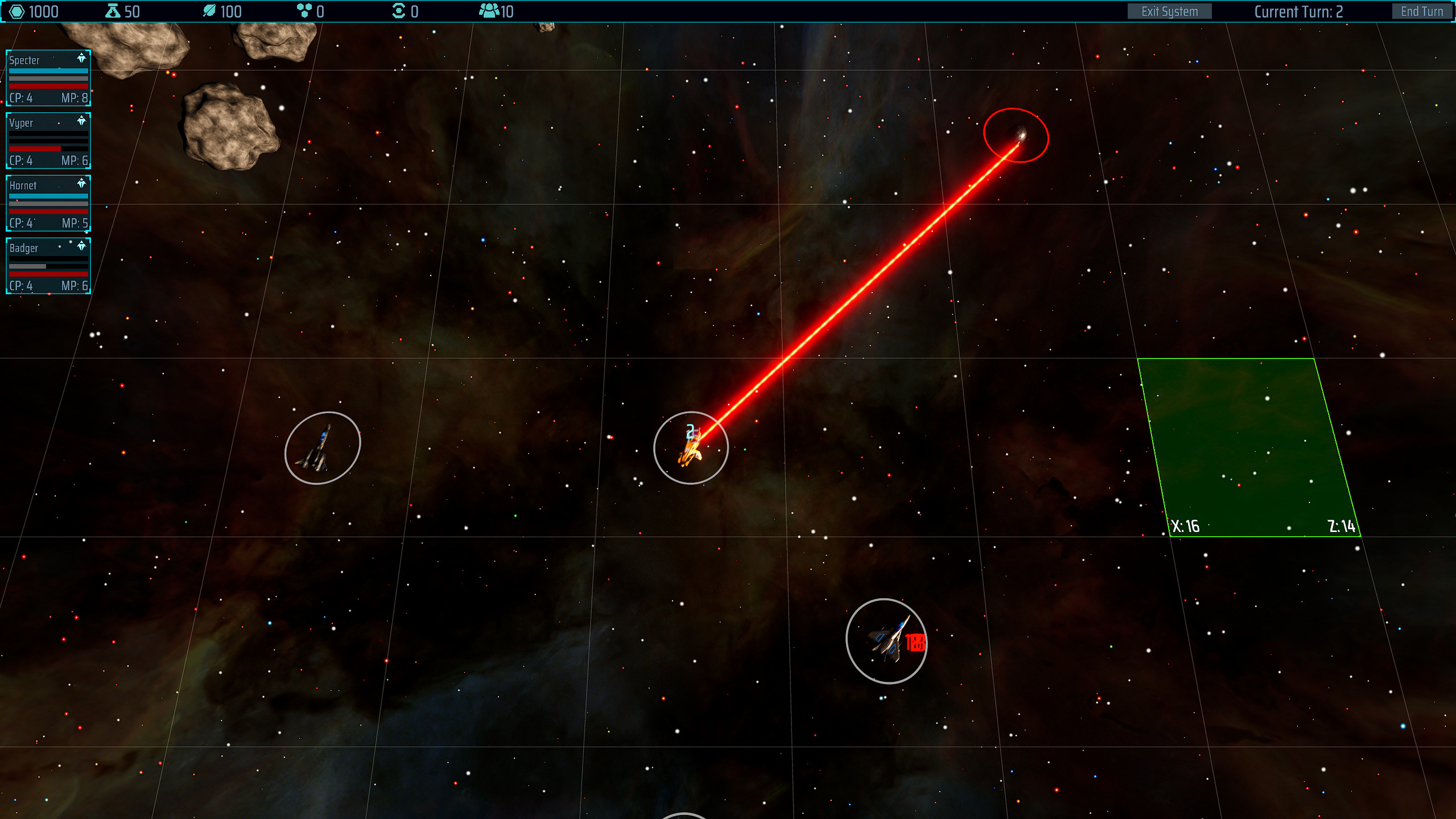
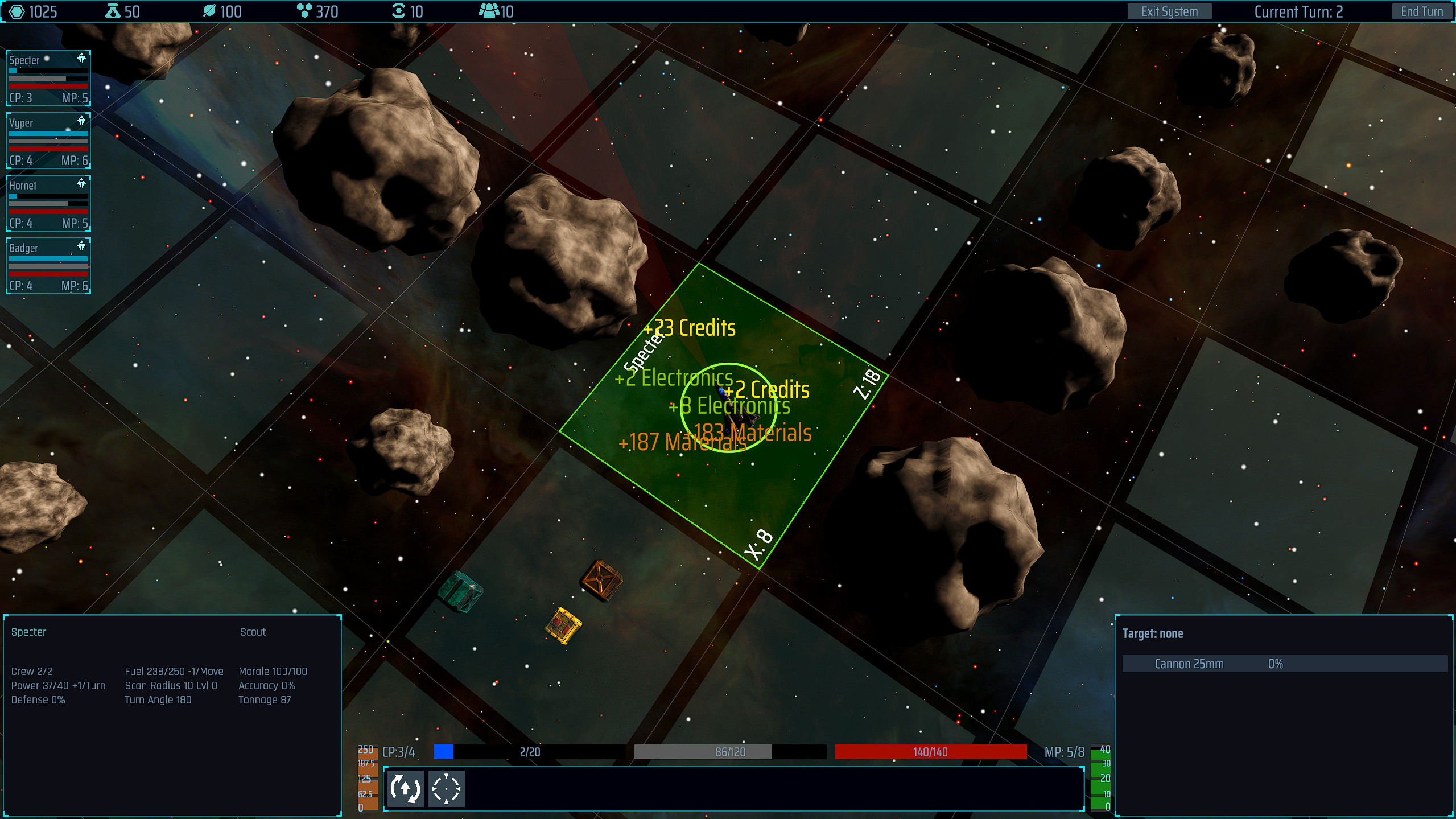
- Resource gathering in space — mining, salvage, and logistics operations conducted under threat
- Internal ship logistics — managing power distribution, moving resources between ships/stations, and keeping critical systems (weapons, shields, engines) supplied during combat
- Boarding actions and ship capture — bridges into character-driven ground-style combat at small scale
- Variable engagement types — quick skirmishes, hit-and-run raids, and prolonged sieges, each demanding different tactical approaches
Planet Layer (Possible Future Feature)
Tactical layer — ground-level operations
The planet layer mirrors the tension and structure of the space layer but on solid ground, covering everything from small tactical engagements to sustained planetary operations.
FEATURES
- Turn-based tactical ground combat with squad-level positioning, cover, and terrain considerations
- Ground and air vehicles — deployable units with distinct roles (transport, assault, recon) usable alongside infantry squads
- Base building on planetary surfaces — footholds for resource extraction, defense, or long-term settlement scouting
- Resource gathering on the ground — distinct from space-based resources, tied to planetary biomes/conditions
- Variable mission types — raids, extractions, sieges, and defense scenarios, consistent with the pacing established in space
- Environmental and biome variety feeding into procedural planet generation (hazards, terrain, native life, Exophage presence)
- Planetary classification — each planet assigned a class (E, M, D, F, V, T, G, A, R, X) affecting habitability, resources, and hazards
GALAXY SCENE CONTROLS
- Q,E: Rotate Camera
- Middle Button Zoom
- W - increase throttle
- S - Decrease throttle
- X - Cut throttle
- A - Turn left
- D - Turn right
- F - open Fleet Window
- R - open Research Window
SPACE SCENE CONTROLS
- W,A,S,D: Camera Movement
- Q,E: Rotate Camera
- Middle Button Zoom
- U: Opens Unit Builder (really just a unit viewer atm)
- Left Click to Select a Unit, Right Click to Select Target
- List Click Turn Button then Left Click a Grid Cell to Turn to face it
Download
Development log
- Deliverance - Prototype v 0.0.7 Released1 day ago
- Deliverance - Prototype v 0.0.6 Released4 days ago
- Deliverance - Prototype v 0.0.5 Released5 days ago
Leave a comment
Log in with itch.io to leave a comment.